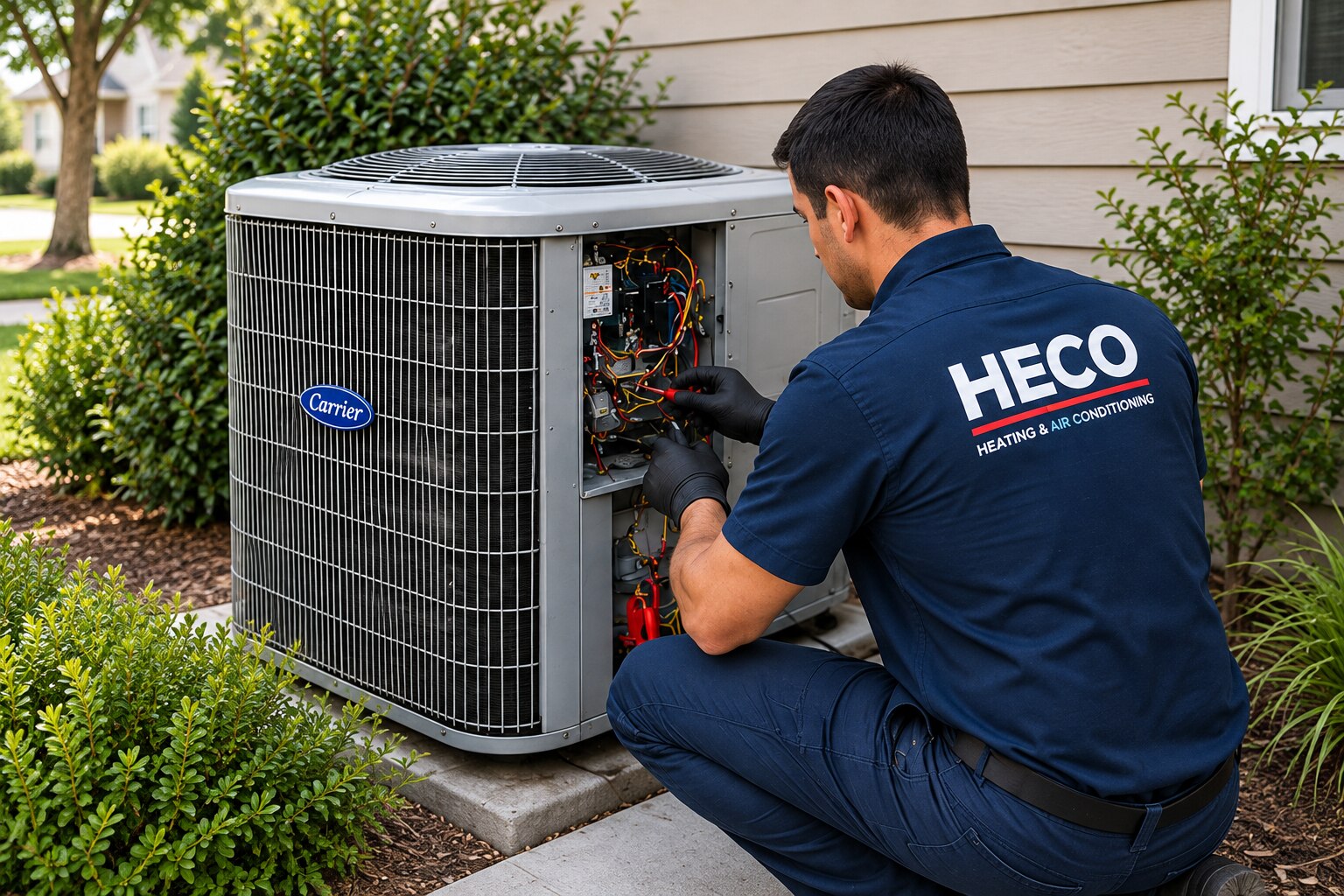
First, describe the symptom accurately
“Running but not cooling” can mean the indoor fan is moving air while the outdoor unit is off, both units are operating but the air is warm, airflow is weak, or the system cools briefly and stops. Those details help narrow the diagnostic path. Note when the problem began, whether every room is affected, and whether you saw ice, water, unusual sounds or a tripped breaker.
Safe checks you can make
- Confirm the thermostat is set to Cool and the temperature setting is below the room temperature.
- Check whether the thermostat display is on and whether an unexpected schedule is active.
- Inspect the return-air filter and replace it if it is visibly dirty and the replacement is appropriate for your system.
- Make sure supply registers and the main return are not blocked by furniture or stored items.
- Look from a safe distance to see whether the outdoor unit appears to be operating.
- Check for visible ice or water around the indoor equipment.
Do not open electrical panels, bypass controls, add refrigerant or repeatedly reset a breaker that trips. If you smell burning, see damaged wiring or believe there is an immediate safety risk, turn the equipment off when it is safe to do so and request qualified help.
Why an AC can run without cooling
Restricted airflow can reduce heat transfer and may contribute to coil icing. Electrical components or controls can prevent the outdoor equipment from operating even though the indoor fan runs. Dirty coils, blower problems, refrigerant leaks, metering issues and compressor faults can also reduce cooling. Because several problems create similar symptoms, replacing a capacitor or adding refrigerant based only on a guess may waste money or create a safety problem.
What an AC diagnostic visit should establish
A useful diagnosis begins with the complaint and equipment history, then checks the items relevant to that symptom. Depending on the system, this may include thermostat and control operation, filter and airflow condition, electrical components, indoor and outdoor equipment, drainage, temperature change and refrigeration performance. The goal is to identify the cause, not simply make the equipment run temporarily.
Ask what failed, what testing supports the conclusion, whether another condition contributed, what the proposed repair includes, and what should be checked after the repair. HECO explains the observed condition and proposed next step before approved work moves forward.
When repair and replacement should both be discussed
An isolated repair may be practical when the rest of the system is in serviceable condition. Repeated breakdowns, a major component failure, difficult parts availability, poor comfort or a system near the end of its useful service life may justify comparing replacement. Age alone does not decide the answer. The property, equipment condition, repair history and owner’s goals all matter.
Rocklin and Sacramento heat change the urgency
During a hot period, indoor temperature can rise quickly—especially in an upper floor, a home with high solar exposure or a building with limited insulation. Protect vulnerable occupants and pets and use a safe alternate cooled location when necessary. An online request is not a confirmed appointment; call HECO at (916) 813-2766 to discuss current availability.
Need an answer for your HVAC system?
Describe the symptom, property type and equipment. HECO will help identify the next practical step.
Request Service