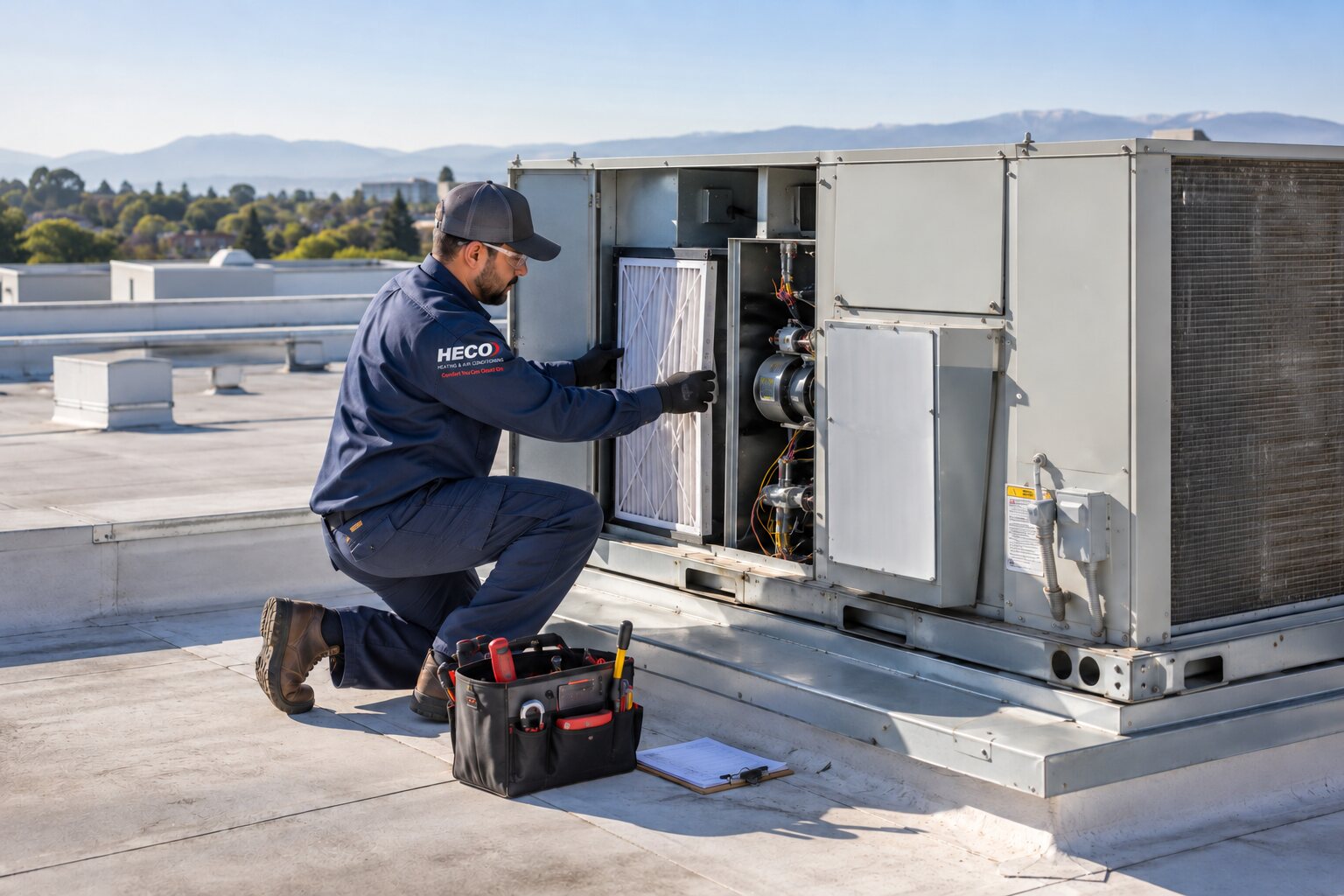
Maintenance frequency should match the building
A rooftop unit serving a quiet office does not operate under the same conditions as equipment serving a restaurant, salon, gym, retail space or high-occupancy facility. Filter loading, outdoor contaminants, operating hours, ventilation demand, tenant schedules and process loads affect the maintenance interval.
Many properties plan service at least seasonally. Filters and critical equipment may need more frequent attention when operating hours are long or the environment is dusty or grease-laden. Manufacturer guidance and actual inspection findings should shape the schedule.
Build an equipment inventory first
List each unit’s location, served area, manufacturer, model, serial number, approximate age, filter sizes, controls, refrigerant where known and service history. Labeling rooftop equipment consistently with tenant or zone information reduces confusion during service calls and replacements.
Record roof access requirements, ladder or hatch conditions, keys, alarm procedures, parking or loading restrictions and the site contact who can authorize work.
What a useful maintenance visit may include
- Review tenant complaints and recent operating history.
- Inspect or replace filters appropriate to the unit and environment.
- Examine coils, drainage, panels and visible cabinet condition.
- Check belts and mechanical components where applicable.
- Inspect electrical components and connections appropriate to the service scope.
- Review thermostat, sensor, control and economizer operation where installed.
- Evaluate heating and cooling operation under available conditions.
- Document deficiencies, readings and recommended follow-up.
The exact checklist depends on equipment design and season. Maintenance cannot guarantee that a component will not fail, but it can reveal developing conditions and create a record for planning.
Protect business continuity
Coordinate access and likely shutdowns with tenants or managers. For critical areas, identify what happens if a unit is unavailable and whether temporary measures are practical. Schedule disruptive work, crane activity or roof access around business operations when possible.
Keep communication simple: which unit is affected, what area it serves, whether it is operating, what was found, what action is proposed and whether another visit or part is required.
Use records to plan replacement
A service history helps distinguish an isolated repair from a pattern. When a rooftop unit has repeated failures, comfort complaints, damaged major components or difficult parts availability, compare repair with a planned replacement. A replacement scope may include curb or adapter conditions, crane access, roof coordination, electrical work, controls, ventilation, permits and tenant scheduling.
Avoid waiting for peak weather to begin that comparison. Planned decisions generally allow more time to verify equipment, access and operational requirements.
HECO’s commercial approach
HECO provides service for compatible light-commercial HVAC equipment in the greater Sacramento and Placer region. The first step is confirming the equipment type, location, access and business need. An online request is not a confirmed appointment; HECO contacts the requester to review availability and the service scope.
Need an answer for your HVAC system?
Describe the symptom, property type and equipment. HECO will help identify the next practical step.
Request Service